Canada's Proposed Clean Fuel Regulations Changes: Are Home EV Charging Rewards at Risk?
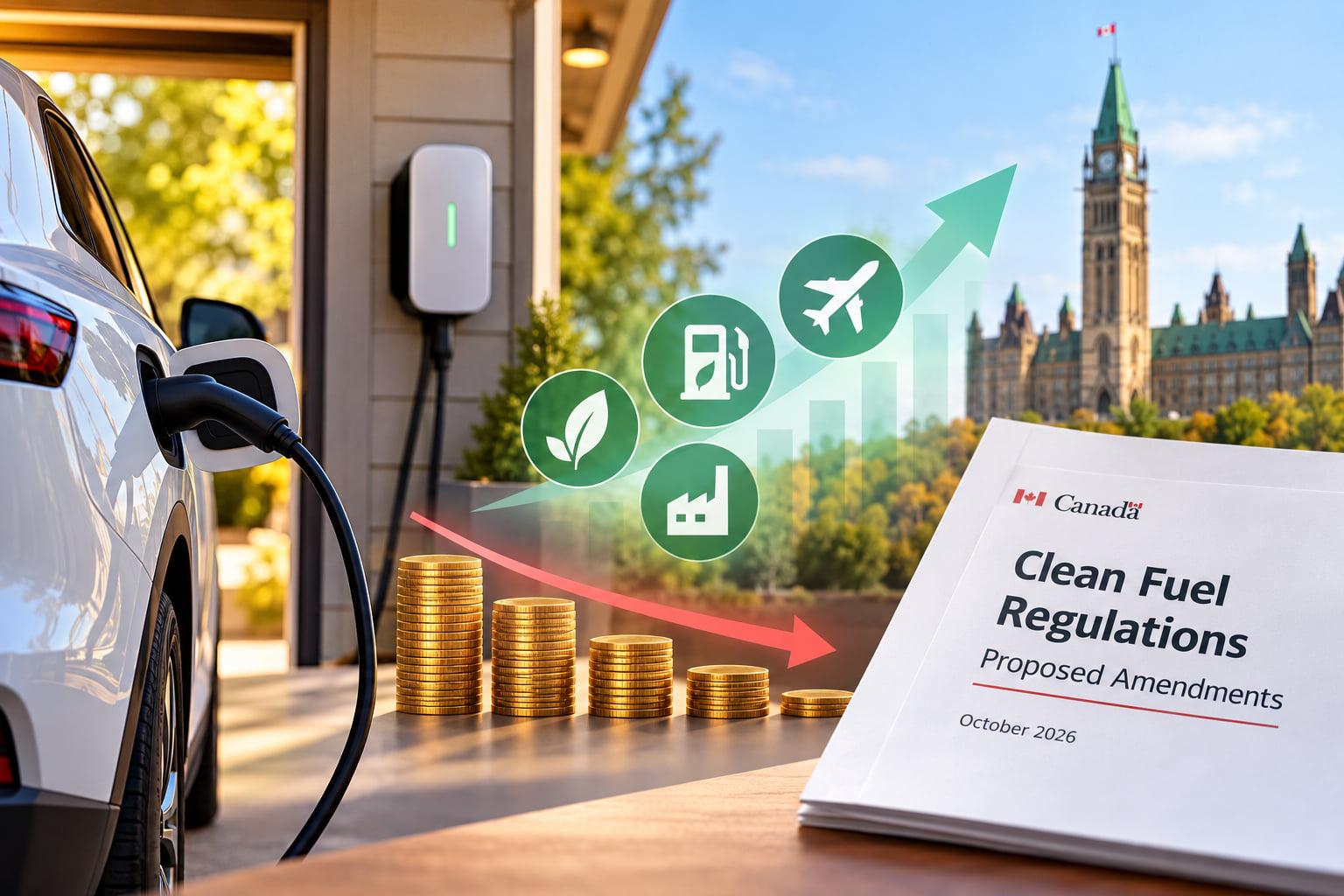
The Canadian government has published proposed changes to the Clean Fuel Regulations (CFR), raising concerns among electric vehicle owners about the future of home charging rewards programs.
Some have interpreted the amendments as preventing homeowners from generating carbon credits through residential EV charging.
Based on ChargeClub's interpretation, the proposed changes do not eliminate the existing mechanism for residential charging rewards. However, they introduce another risk that could affect how much these programs pay in the future.
Important disclaimer: This article presents ChargeClub's independent interpretation of the proposed regulatory amendments, based on publicly available government documents as of October 30, 2026. ChargeClub is not a legal or regulatory authority, and this analysis has not been reviewed by legal counsel. Our interpretation should not be considered an official determination of the regulations or their impact on individual rewards programs.
How do EV charging rewards work?
Under Canada's Clean Fuel Regulations, companies that produce or import gasoline and diesel must meet increasingly strict carbon-intensity requirements.
One way to meet these requirements is by purchasing compliance credits generated through eligible activities, including EV charging.
When you charge an electric vehicle at home, an eligible charging-network operator or registered credit creator can generate credits based on the electricity used.
These credits can then be sold, with revenue supporting charging infrastructure or financial incentives for EV owners, including home charging rewards.
In simple terms, the value of these credits helps make home charging rewards possible.
Will residential EV charging still qualify for credits?
No general ban on residential EV charging credits appears in the proposed amendments.
The confusion comes from a proposed change to the definition of a "charging-site host."
Under the new wording, this definition would exclude certain residential charging stations installed at the expense of a dwelling's occupant.
At first glance, that might sound like residential charging is being excluded entirely.
However, the existing regulations establish a separate pathway under Section 102 that explicitly allows eligible residential charging stations to generate credits through charging-network operators.
The proposed amendments do not repeal Section 102's residential charging pathway.
This means eligible residential charging can continue generating credits through the appropriate operators or registered credit creators, subject to existing requirements.
ChargeClub interprets this change as a clarification of which regulatory pathway applies to homeowner-funded charging stations, rather than an elimination of residential charging rewards.
This interpretation has not been legally verified, and the impact on individual providers may differ.
What is actually changing?
The government wants to strengthen Canada's domestic low-carbon fuel industry.
To accomplish this, it proposes awarding additional compliance credits to certain low-carbon fuels produced in Canada, including ethanol, biodiesel, renewable diesel and sustainable aviation fuel.
Depending on the fuel, eligible production could generate approximately 30% to 80% more credits than under the existing system.
For example, an eligible activity that previously generated 100 credits could potentially generate 130 credits under a 1.3 multiplier.
The government's regulatory impact analysis estimates:
- 2 million additional credits in 2026
- 2.8 million additional credits in 2030
- 26.9 million additional credits between 2026 and 2035
These additional credits would enter the existing compliance market, not a separate market for biofuels.
Why could this affect your rewards?
Like most markets, the value of CFR credits depends partly on supply and demand.
When more credits become available, buyers may have less reason to pay higher prices.
The government's regulatory impact analysis discusses concerns that increasing the supply of credits could create oversupply and put downward pressure on market prices.
That matters because residential EV charging credits compete in the same compliance market.
If credit prices decline, companies operating home charging rewards programs could receive less revenue from selling them.
Over time, this could lead some providers to reduce their reward rates, change their offers or reconsider their business models.
However, lower rewards are not guaranteed.
Actual outcomes will depend on market conditions, each provider's financial arrangements and the terms of its rewards program. The proposed amendments do not establish any specific reduction in payments per kWh.
It is also too early to predict how much credit prices might change.
Should EV owners be worried?
There is no reason to assume that residential charging rewards are ending or that existing rewards will immediately decrease.
The amendments are still proposals, with a 75-day public consultation period before the government finalizes its approach.
For now, EV owners can continue comparing available programs based on their published rates and conditions, while recognizing that future rewards may evolve.
The bottom line: Based on ChargeClub's interpretation, the biggest concern is not whether eligible residential charging can continue generating credits. It is whether those credits will remain valuable enough to sustain today's reward rates.
ChargeClub will continue monitoring regulatory developments and changes announced by program providers.
Official sources
- Canada Gazette, Part I, October 31, 2026: Regulations Amending the Clean Fuel Regulations and the Environmental Violations Administrative Monetary Penalties Regulations (proposed)
- Clean Fuel Regulations (SOR/2022-140), current consolidated text
- Environment and Climate Change Canada, October 27, 2026: Canada proposes changes to support the low-carbon fuel industry
About ChargeClub: ChargeClub.ca is an independent Canadian website dedicated to comparing EV home charging rewards programs. This article is provided for general information and does not constitute legal, regulatory or financial advice.